
 MaterialTinView details
  PRODUCT PHOTO / PROVISIONAL
01 Tin and tin alloys
Solder.
Technical information on Solder. Material data and supply forms on request.
Inquire about product02 Product information
Details on
Solder.
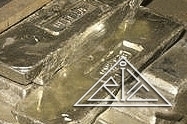
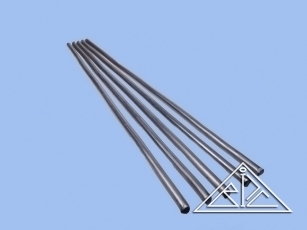
solder is a metal or alloy used in soldering for joining workpieces and having a melting point lower than the metals to be joined.Apply alloys based on tin, lead, cadmium, copper, nickel, etc.
Salting is carried out either to create a mechanically strong (sometimes sealed) seam, or to obtain electrical contact with a small transient resistance. When soldering, the joints and solder are heated. Since solder has a melting point much lower than the combined metal (or metals), it melts, while the base metal remains solid. At the border of contact of molten solder and solid metal, various physicochemical processes occur. The solder wets the metal, spreads over it and fills the gaps between the connected parts. At the same time, the solder components diffuse into the base metal, the base metal dissolves in the solder, as a result of which an intermediate layer is formed, which after solidification connects the parts into one whole.
Select solder taking into account the physical and chemical properties of the combined metals, the required mechanical strength of the solder, its corrosion resistance and cost. When soldering live parts, it is necessary to take into account the specific conductivity of solder.
They are divided into two groups: soft and hard. To soft include solders with a melting point of up to 300 ° C, to solid - above 300 ° C. In addition, solders differ significantly in mechanical strength. Soft solders have a tensile strength of 16-100 MPa, and solid solders have 100-500MPa.
Soft solders are tin-lead alloys (POS) with a tin content of 10 (POS-10) to 90% (POS-90), the rest lead. The conductivity of these solders is 9-15% pure copper. A large number of tin-lead solders contain a small percentage of antimony (such solders are designated POSS).
The most common hard solders are copper-zinc (PMC) and silver (PSR) with various additives.
Recently, when choosing solder more seriously consider the toxicity of its components. In electrical engineering and electronics (especially in household) lead-free solders are increasingly used.
Important for sourcingPurity, form, quantity and timing help us assess your inquiry.
03 More materials
Also of interest.
MaterialTinView details  MaterialIndium-tin alloyView details
 04 Inquiry
Your material.
Your specification.
Tell us the required purity, form and quantity so we can assess your request.