
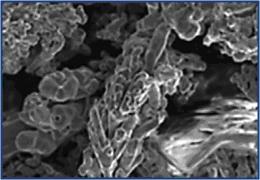
 MaterialNickel electrolytic powdersView details
 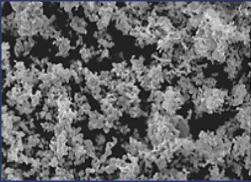 PRODUCT PHOTO / PROVISIONAL
01 Nickel and cobalt powders
Cobalt thermochemical powders.
Technical information on Cobalt thermochemical powders. Material data and supply forms on request.
Inquire about product02 Product information
Details on
Cobalt thermochemical powders.
Cobalt Thermochemical Powders
Thermochemical ultrafine cobalt powder is produced by a single-stage thermochemical method of decomposition and reduction of metal salts in accordance with the requirements of technical specifications TU 1793-010-07622839-2010.
At the request of the customer, the powder can be produced both in accordance with the TU and according to additional requirements.
Characteristics of thermochemical cobalt powder
| Name of the parameter | Value of parameter norm |
Bulk density, g/cm3, not more |
0,9 |
Conditional particle size according to Fisher*, μm |
0,7-1,6 |
*The dispersion of the powder is characterized by the average diameter of the particles according to Fisher.
Chemical properties of thermochemical cobalt powder
| At least % of the mass. | Content of elements, not more than % of mass. |
||||||
99,8 |
Ni |
Fe |
O |
Mg |
Mn |
S |
Zn |
0,05 |
0,025 |
0,5 |
0,005 |
0,005 |
0,01 |
0,005 |
|
Ca |
Al |
C |
Cu |
Si |
Na |
||
0,01 |
0,002 |
0,1 |
0,01 |
0,01 |
0,015 |
||
Application
The domestic industry produces more than 30 grades of solid alloys, including about 20 grades for the manufacture of cutting parts of tools. The cutting part (cutting clan) of tools during operation is subjected to abrasion, thermal effects and power loads, carrying out continuous deformation of the cut layer. These very difficult working conditions determine the requirements for cutting materials. The suitability of such materials is determined by their hardness, heat resistance, mechanical strength, wear resistance, manufacturability and cost. These materials are alloys of refractory metal carbides with cobalt. To date, there are many different alloys of this system, which differ in the amount of cobalt, variance of the carbide phase, the presence of various strengthening and inhibitory additives, etc. Invariable in them is the presence of two components: tungsten carbide, which plays the role of the “solid phase”, and cobalt, used as a ligament. The combination of high mechanical properties of tungsten carbide with ductility and high impact toughness of cobalt provides them with high hardness, strength and wear resistance. It is because of this that they are widely used as tool materials in the metalworking and mining industries.
Currently, special attention is paid to the production and use of substances and materials in the nanocrystalline state. Taking into account trends in the use of nanostructured materials, the main direction of improving metal-cutting solid alloys is the formation of a superfine-grained structure in them.
Traditional solid alloys are made by powder metallurgy methods from microcrystalline and submicrocrystalline powders of tungsten carbide and cobalt. Therefore, the quality of the solid alloy is responsible for the initial powders, both tungsten carbide and cobalt.
Studies of the morphology and crystallochemical characteristics of cobalt powders conducted by the Institute of Solid State Chemistry of the Ural Branch of the Russian Academy of Sciences using X-ray diffraction and scanning electron microscopy have shown that thermochemical cobalt powders are nanostructured. Nanocrystalline materials are obtained mainly by powder metallurgy methods. Features of the structure of nanocrystalline materials (the size of grains, a significant proportion of the interface and their state, porosity and other structural defects) are determined by the methods of their production and have a significant impact on their properties. With a decrease in grain size, strength increases while maintaining plasticity, the effect of low-temperature and high-speed superplasticity manifests itself, and a change in physical properties is observed.
The prospects for using ultrafine and, especially, nanostructured cobalt powders in various fields are constantly expanding. Nanoscale cobalt powders have a large saturation induction and are promising materials for creating information storage systems, magnetic liquids, nanostructured composite materials, are used in magnetoresonance tomography. Suspensions of cobalt nanoparticles are used as additives to motor oils to restore worn parts of automotive and other engines directly during operation.
Important for sourcingPurity, form, quantity and timing help us assess your inquiry.
03 More materials
Also of interest.
MaterialNickel electrolytic powdersView details 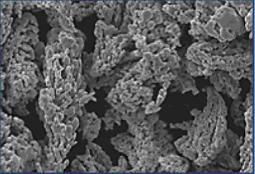 MaterialCobalt electrolytic powdersView details
 04 Inquiry
Your material.
Your specification.
Tell us the required purity, form and quantity so we can assess your request.