
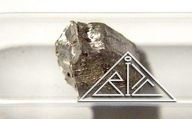
 MaterialCeriumView details
 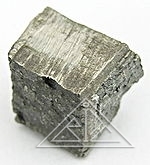 PRODUCT PHOTO / PROVISIONAL
01 Rare earth metals
Dysprosium.
Technical information on Dysprosium. Material data and supply forms on request.
Inquire about product02 Product information
Details on
Dysprosium.
Dysprosium is one of the most common elements of the yttrium subgroup. In the Earth's crust, it is 4.5 times more than tungsten. It looks the same as the rest of the rare-earth family, shows a valence of 3+, the color of oxide and salts is light yellow, usually with a greenish, less often with an orangeish tint.
The name of this element comes from the Greek δυσπροσιτος, which means “hard to access”. The name of element 66 reflects the difficulties faced by its discoverer. The oxide of this element - earth dysprosia - was discovered by Lecoc de Boisbodran spectroscopically, and then isolated it from yttrium oxide. This happened in 1886, and 20 years later, Urben received dysprosium in a relatively pure form.
However, it was possible to more or less accurately determine the basic physicochemical constants of this element only after A.N. Daape and F. Spending developed a two-step method for obtaining elementary dysprosium. First, dysprosium oxide is converted into fluoride, which is then exposed to metallic calcium when rapidly heated to 1500°C. In this way, a silvery-white plastic metal with a density of 8.5 g / cm3 is obtained, which melts at 1407 ° C. Now in our country receive calcium-thermal dysprosium purity of 99.76%.
Among other lanthanides, dysprosia is little distinguished. However, it, like gadolinium, under certain conditions is characterized by ferromagnetism, only at low temperature.
Natural dysprosium consists of seven stable isotopes with mass numbers 156, 158, 160, 161, 162, 163 and 164. The heaviest isotope is common to others (its share in the natural mixture is 28.18%), and the lightest is the rarest (0.0524%).
Important for sourcingPurity, form, quantity and timing help us assess your inquiry.
03 More materials
Also of interest.
04 Inquiry
Your material.
Your specification.
Tell us the required purity, form and quantity so we can assess your request.