
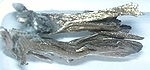
 MaterialSamarium metalView details
 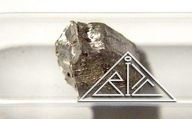 PRODUCT PHOTO / PROVISIONAL
01 Rare earth metals
Cerium.
Technical information on Cerium. Material data and supply forms on request.
Inquire about product02 Product information
Details on
Cerium.
| Product name: Atomic number: Atomic mass: Density: Melting point: |
cerius 58 140,115 6.757 g/cm3 804° |
Cerius (Ce) - a chemical element from the group of lanthanides, silvery-white metal. It is the most common rare earth metal. The name of the element cerium is associated with the discovery of one of the celestial bodies – the planet Ceres.
Chemically characterized by the presence of two valence states: +3 and +4. Cerium is a chemically active metal. It combines well with oxygen, nitrogen and hydrogen. In the air, cerium is covered with a thin oxide film. At temperatures above 300 ° C, it ignites and turns into cerium dioxide.
Cerium is a rare earth metal, unstable in air, gradually oxidizes, turning into white oxide. There are no purely cerium minerals in nature. The main minerals of cerium are bastnesite and monacite.
Cerium is a malleable and viscous metal. It can be rolled and in the heated state stretches into the wire.
Cerium application:
- metallurgy;
- catalysts;
- thermoelectric materials;
- glass production;
- abrasive materials;
- pyrophoric alloys;
- light sources;
- fire-resistant materials;
- medicine;
- fuel cells;
- chemical sources of current.
Important types of cerium products are alloys, oxides, carbonates, acetates and a number of other compounds. The prices of cerium materials depend on the type of product (oxide, metal or compound) and its purity.
Metallurgy
In modern technology, the ability of cerium (as well as other lanthanides) to modify alloys based on iron, magnesium, adding 1% cerium to magnesium dramatically increases the strength of the latter to tear and creep resistance. Cerium increases the electrical conductivity of aluminum, copper, niobium, titanium.
Alloying structural steels with cerium significantly increases their strength. Here, the action of cerium is generally similar to that of lanthanum. But since cerium and its compounds are cheaper and more affordable than lanthanum, the value of cerium as an alloying additive is greater than lanthanum.
Alloying aluminum cerium dramatically increases its strength and electrical conductivity (by several percent).
It is worth noting the fact that cerium with a number of metals reacts very violently during alloying with the formation of intermetallides. So very characteristic of cerium violent reaction with zinc when fused or when locally heated mixture of cerium powder with zinc powder. This reaction takes place in the form of a powerful explosion, so it is very dangerous to add a piece of cerium to molten zinc - there is a bright flash and a strong explosion.
Catalysts
In the chemical and petroleum industries, cerium dioxide (CeO2) is used as a catalyst. In particular, CeO2 does a good job of speeding up a practically important reaction between hydrogen and carbon monoxide. Cerium dioxide also works well and reliably in devices where alcohol dehydrogenation occurs. Another cerium compound, its Ce(SO4)2 sulfate, is considered a promising catalyst for sulfuric acid production. It greatly accelerates the reaction of oxidation of sulfur anhydride into sulfur anhydride.
Thermoelectric materials
Cerium sulfide is used as a high-temperature thermoelectric material with high efficiency, to increase efficiency is usually doped with strontium sulfide.
Glass production
In nuclear technology, cerium-containing glass is widely used - they do not dim under the influence of radiation, allowing you to make thick glasses to protect personnel.
Cerite dioxide is included in special glasses as a brightener and sometimes as a light yellow dye.
Abrasive materials
Cerium dioxide is the main component of polyrite, the most effective powder for polishing optical and mirror glass. Polyrite is a brown powder consisting of rare earth oxides. Cerium oxide is at least 45%. It is known that with the transition to polishing, the quality of polishing has significantly improved. At the Kharkiv plant named after F. E. Dzerzhinsky, for example, the output of first-class mirror glass after the transition to polyrite increased 10 times. The production capacity of the conveyor has also increased – at the same time, polyrite removes about twice as much material as other polishing powders.
Pyrophoric alloys
An alloy of cerium with 50% iron (ferrocerium), and sometimes mischmetal, is used as an artificial “silicon” in lighters.
Light sources
Cerium trifluoride is used as an additive in the manufacture of coals for arc light sources, its addition to the carbon material dramatically increases the brightness of the glow.
Cerium oxide together with titanium dioxide is used to cook colored glasses, painted from light yellow to orange.
Refractory materials
As extremely persistent refractory materials, cerium dioxide (up to 2300 ° C in an oxidative and inert atmosphere), cerium sulfide (up to 1800 ° C in a reducing atmosphere) are used.
Ceres in medicine
Cerium salts are used to treat and prevent symptoms of seasickness. In dentistry, cerium steel and ceramics with cerium dioxide content are used.
Fuel cells
Cerium dioxide is used as a component for the production of solid electrolyte of high-temperature fuel cells.
Chemical sources of current
Cerium trifluoride in an alloy with strontium fluoride is used to produce very powerful solid-state batteries. The anode in such batteries is pure metallic cerium.
Important for sourcingPurity, form, quantity and timing help us assess your inquiry.
03 More materials
Also of interest.
MaterialSamarium metalView details  MaterialLanthanum metalView details
  MaterialPraseodymiumView details
 04 Inquiry
Your material.
Your specification.
Tell us the required purity, form and quantity so we can assess your request.