
 MaterialZincView details
  PRODUCT PHOTO / PROVISIONAL
01 Non-ferrous metals
Bronze.
Technical information on Bronze. Material data and supply forms on request.
Inquire about product02 Product information
Details on
Bronze.
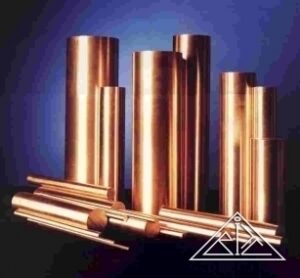
Bronzes are called double and multicomponent copper alloys, in which the main alloying elements are various metals, except zinc.
Copper nickel alloys are allocated to a separate group of materials. The name bronze is given by alloying elements (for example, an alloy of copper with aluminum is called aluminum bronze). Bronzes are marked with the letters BR, followed by capital letters of alloying elements and through a hyphen digits - their percentage content.
There are two groups of bronzes: tin, in which the predominant alloying element is tin, and tinless (special).
On the technological basis, bronzes are divided into deformable and foundry. The former are easy to stamp, forge, riff and other types of pressure treatment used in the manufacture of products. Foundry bronzes are designed for shaped castings. Bronzes in comparison with brass have higher strength, corrosion resistance and antifriction properties. They are very resistant in air, in sea water, solutions of most organic acids, carbon dioxide solutions.
As alloying elements in bronze use tin, aluminum, nickel, manganese, iron, silicon, lead, phosphorus, beryllium, chromium, zirconium and other elements. Bronzes in which alloying elements are included in a solid solution are strengthened with a deformation sticker. Subsequent low-temperature annealing (250-300 ° C) can increase their elastic properties. Bronzes containing beryllium, chromium, zirconium and some other elements with variable solubility in a solid solution are strengthened by dispersion hardening.
Of these elements, tin, aluminum, nickel and silicon mainly increase the strength, elastic properties and corrosion resistance of bronze, and in combination with other elements (lead, phosphorus, zinc) also antifriction properties.
Iron and nickel strongly grind grain and increase the recrystallization temperature of bronzes. Manganese and silicon increase their heat resistance. Beryllium, chromium and zirconium, especially after hardening and aging, increase the strength properties of alloys, while slightly reducing their electrical conductivity. These elements significantly increase the heat resistance of bronzes. Most bronzes (except aluminum) are well welded and soldered with hard and soft solders.
Tinless bronzes are not inferior in their properties, and in some they surpass tin bronzes, and therefore they are widely used in mechanical engineering and other industries. Bronzes are used for the manufacture of fittings, all kinds of gears, bearings, bushings, tanks, tanks and other important parts and components of machines and devices.
Important for sourcingPurity, form, quantity and timing help us assess your inquiry.
03 More materials
Also of interest.
04 Inquiry
Your material.
Your specification.
Tell us the required purity, form and quantity so we can assess your request.