
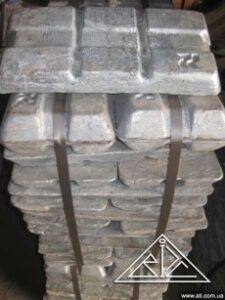
 MaterialZincView details
 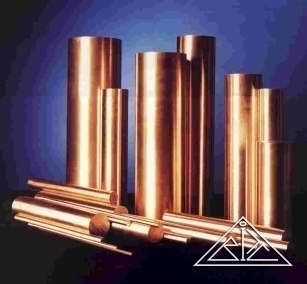 PRODUCT PHOTO / PROVISIONAL
01 Non-ferrous metals
Copper.
Technical information on Copper. Material data and supply forms on request.
Inquire about product02 Product information
Details on
Copper.
Copper is a chemical element of Group I of Mendeleev's periodic system; atomic number - 29, atomic mass - 63,546. Melting point - 1083 °CMelting point - 1083 ° C, boiling point - 2595 ° C; density - 8.98 g / cm 3.
Pure copper is a viscous, viscous metal of red, in a fracture of pink color, in very thin layers at the lumen, copper looks greenish-blue. The same colors are characteristic of many copper compounds, both in the solid state and in solutions.
In industry, copper alloys with zinc, tin, aluminum, silicon, etc. are used. (and not pure copper) because of their greater strength: 30-40 kgf / mm 2 in alloys and 25-29 kgf / mm 2 in technically pure copper.
Copper alloys (except beryllium bronze and some aluminum bronze) do not accept heat treatment, and their mechanical properties and wear resistance are determined by the chemical composition of copper alloys and its effect on the structure. Module of elasticity of copper alloys (900-12000 kgf / mm 2 lower than steel).
The main advantage of copper alloys is a low friction coefficient (which makes them especially rational for use in slip pairs), combined for many copper alloys with high ductility and good resistance against corrosion in a number of aggressive media and good electrical conductivity.
The value of the coefficient of friction is almost the same for all copper alloys, while the mechanical properties and wear resistance, as well as the behavior in corrosion conditions depend on the composition of the alloys, and therefore on the structure. Strength is higher in two-phase copper alloys, and plasticity in single-phase.
Copper is a material for the manufacture of many types of colored rolled products, including copper tape and wire, copper rods and tires, copper sheets (leaf copper).
Copper wire, sheet copper, copper tapes and strips are made by casting and pressure treatment.
Copper, and therefore colored rolled products made on its basis, has the following special properties:
Pure copper is a viscous, viscous metal of red, in a fracture of pink color, in very thin layers at the lumen, copper looks greenish-blue. The same colors are characteristic of many copper compounds, both in the solid state and in solutions.
In industry, copper alloys with zinc, tin, aluminum, silicon, etc. are used. (and not pure copper) because of their greater strength: 30-40 kgf / mm 2 in alloys and 25-29 kgf / mm 2 in technically pure copper.
Copper alloys (except beryllium bronze and some aluminum bronze) do not accept heat treatment, and their mechanical properties and wear resistance are determined by the chemical composition of copper alloys and its effect on the structure. Module of elasticity of copper alloys (900-12000 kgf / mm 2 lower than steel).
The main advantage of copper alloys is a low friction coefficient (which makes them especially rational for use in slip pairs), combined for many copper alloys with high ductility and good resistance against corrosion in a number of aggressive media and good electrical conductivity.
The value of the coefficient of friction is almost the same for all copper alloys, while the mechanical properties and wear resistance, as well as the behavior in corrosion conditions depend on the composition of the alloys, and therefore on the structure. Strength is higher in two-phase copper alloys, and plasticity in single-phase.
Copper is a material for the manufacture of many types of colored rolled products, including copper tape and wire, copper rods and tires, copper sheets (leaf copper).
Copper wire, sheet copper, copper tapes and strips are made by casting and pressure treatment.
Copper, and therefore colored rolled products made on its basis, has the following special properties:
- Excellent conduction of heat and electricity. Thus, the electrical conductivity, which is characteristic of copper and is in second place after silver, is 1.7 times higher than that of aluminum, 6 times higher than the electrical conductivity of iron and platinum. Keep in mind that electrical conductivity is better than copper is cleaner.
- malleability
- resistance to temperature change and ultraviolet rays
- excellent plasticity, the possibility of using any type of welding
- high resistance to corrosion. Exposed to atmospheric influence, the influence of water vapor and sulfurous gas, copper is covered with a dense film of greenish-gray color. The film protects copper from further oxidation. Due to this property, copper, as well as alloys made on its basis, are in demand in refrigeration, in the construction of power lines, in electrical engineering and instrumentation, chemical engineering.
Copper is also used in the construction and equipment of houses in the creation of water supply systems, air conditioning, heating, in electrical engineering, instrumentation, medicine. About 50% of all copper is consumed by the electrical industry.
Technically pure copper comes in the form of ingots-semi-finished products, as well as cathode sheets. But because of the lack of strength, such copper is rarely used as a structural material. Copper alloys are also in demand, the most common are brass (copper + zinc, where the zinc content is up to 50%) and bronze.
Copper alloys
Brass - double and multicomponent copper alloys, with the main alloying element - zinc. Compared to copper, they have higher strength and corrosion resistance.
Bronze is an alloy of copper in which the main alloying elements are various metals other than zinc. Bronzes are marked with the letters BR, followed by capital letters of the alloying elements, and through dash numbers showing their percentage.
Important for sourcingPurity, form, quantity and timing help us assess your inquiry.
03 More materials
Also of interest.
04 Inquiry
Your material.
Your specification.
Tell us the required purity, form and quantity so we can assess your request.