
 MaterialRhenium rodsView details
 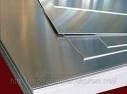 PRODUCT PHOTO / PROVISIONAL
01 Tungsten and rhenium
Tungsten sheets and plates.
Technical information on Tungsten sheets and plates. Material data and supply forms on request.
Inquire about product02 Product information
Details on
Tungsten sheets and plates.
Application
Tungsten belonging to the Vl A group is characterized by a maximum interatomic bond strength, the highest melting point of 3420 ° C among refractory metals, a high density of 19.3 g / cm3, high strength, thermal conductivity, hardness (HV30 > 460), creep resistance and long-term strength (significantly higher than that of molybdenum, tantalum, niobium at a temperature, for example, 1100 ° C). Comparatively with molybdenum, pure tungsten has a higher recrystallization temperature - 1350 ° C approximately, 4-5 orders of magnitude lower vapor pressure and evaporation rate, a lower thermal expansion coefficient (4.2•10-6 at 20 ° C) and low electrical resistance (0.05•10-6 Ohm).
Modern methods of powder metallurgy provide a high degree of purity of tungsten for metal and impurities of introduction (C,N,O,H), a fine-grained structure necessary for use in the electronics industry and as a heat-resistant structural material in electrical engineering and other devices operating at extremely high temperatures.
From pure tungsten, various equipment of high-temperature vacuum and hydrogen furnaces (heat screens, heaters, stands, suspensions, other fasteners) are made, crucibles for melting corundum in the technology of growing sapphires, crucibles for thermal evaporation of substances in technologies of vacuum deposition of thin films, plasmatron electrodes, combustion systems and devices for measuring the concentration of acid solutions in electrochemical processes.
Sprayable targets made of high-purity tungsten are used to apply thin barrier films during metallization of semiconductor components of integrated circuits.
Tungsten and its alloys are used to make heat-resistant rocket parts that work in conditions of extremely high temperatures and intense gas erosion.
The low vapor pressure of tungsten makes it possible to use it at high (up to 2300 ° C) temperatures as an emitter of electrons of thermoelectronic converters.
In nuclear power, tungsten is used as screens to weaken the flow of radioactive radiation, ensure the operability of the elements of structures facing the plasma, under the conditions of exposure to irradiation and thermocyclic loads (diverter of a thermonuclear reactor).
A promising material for the ionizer of plasma-ion engines is porous sintered tungsten.
Tungsten belonging to the Vl A group is characterized by a maximum interatomic bond strength, the highest melting point of 3420 ° C among refractory metals, a high density of 19.3 g / cm3, high strength, thermal conductivity, hardness (HV30 > 460), creep resistance and long-term strength (significantly higher than that of molybdenum, tantalum, niobium at a temperature, for example, 1100 ° C). Comparatively with molybdenum, pure tungsten has a higher recrystallization temperature - 1350 ° C approximately, 4-5 orders of magnitude lower vapor pressure and evaporation rate, a lower thermal expansion coefficient (4.2•10-6 at 20 ° C) and low electrical resistance (0.05•10-6 Ohm).
Modern methods of powder metallurgy provide a high degree of purity of tungsten for metal and impurities of introduction (C,N,O,H), a fine-grained structure necessary for use in the electronics industry and as a heat-resistant structural material in electrical engineering and other devices operating at extremely high temperatures.
From pure tungsten, various equipment of high-temperature vacuum and hydrogen furnaces (heat screens, heaters, stands, suspensions, other fasteners) are made, crucibles for melting corundum in the technology of growing sapphires, crucibles for thermal evaporation of substances in technologies of vacuum deposition of thin films, plasmatron electrodes, combustion systems and devices for measuring the concentration of acid solutions in electrochemical processes.
Sprayable targets made of high-purity tungsten are used to apply thin barrier films during metallization of semiconductor components of integrated circuits.
Tungsten and its alloys are used to make heat-resistant rocket parts that work in conditions of extremely high temperatures and intense gas erosion.
The low vapor pressure of tungsten makes it possible to use it at high (up to 2300 ° C) temperatures as an emitter of electrons of thermoelectronic converters.
In nuclear power, tungsten is used as screens to weaken the flow of radioactive radiation, ensure the operability of the elements of structures facing the plasma, under the conditions of exposure to irradiation and thermocyclic loads (diverter of a thermonuclear reactor).
A promising material for the ionizer of plasma-ion engines is porous sintered tungsten.
Important for sourcingPurity, form, quantity and timing help us assess your inquiry.
03 More materials
Also of interest.
MaterialRhenium rodsView details  MaterialBars, rods and wireView details
  MaterialTungsten sheets V-MPView details
 04 Inquiry
Your material.
Your specification.
Tell us the required purity, form and quantity so we can assess your request.