
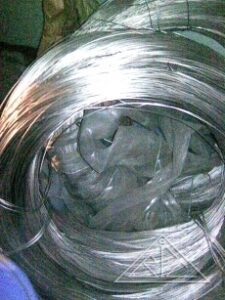
 MaterialTitanium wireView details
  PRODUCT PHOTO / PROVISIONAL
01 Titanium
Titanium.
Technical information on Titanium. Material data and supply forms on request.
Inquire about product02 Product information
Details on
Titanium.
Titanium applications:
Aviation
In the late 1950s, titanium alloys were used in the design of aviation gas turbine engines. They were used as a material of working and guiding blades of compressors, compressor discs, body parts and shells. This, in turn, allowed to reduce the weight of parts by 1.7 times, while maintaining the strength and durability of titanium.
In aircraft, titanium alloys are used both to create the power elements of the airframe, and as armor.
Rocket engineering
Quite widely used titanium alloys in rocket and space technology, in launch vehicles and spacecraft. The mass share of titanium alloys in products ranges from 5 to 30%.
From titanium alloys in domestic space technology are made: power units, solid fuel and liquid rocket engines, high pressure cylinders, life support systems, elements of docking units, mounting parts, brackets, batteries of blowing systems, impellers for supplying liquid hydrogen and other parts.
Shipbuilding
Titanium alloys are used due to the combination of high corrosion resistance, high specific strength, non-magneticity in the creation of ships, submarines, and deep-sea vehicles.
Titanium alloys are made of: systems of transport nuclear power plants, ship capacitors, heat exchangers, pumps, marine energy parts, ship pipeline systems and exhaust chimneys, catapult water brakes, blast jet reflectors, vertical descent systems, paddle shafts, attachment parts, body armor, valves, doors, hatches and other parts.
Metallurgy, chemical, petrochemical and pulp and paper industries.
The use of titanium and its alloys in these industries is due to its extremely high resistance in chlorine-containing oxidative media.
In the production of non-ferrous and rare metals, titanium is used for the manufacture of large-sized equipment such as baths. Titanium was most widely used in nickel-cobalt and titanium magnetism metallurgy. Titanium is made of filtration equipment, autoclaves, heat exchangers, evaporators, reactors, tanks, linings of electrolysis baths, pumps, matrixes and others.
In the production of ferrous metals from titanium are made: saturators, centrifuges, shut-off fittings, pumps, bubble umbrellas, circulation tanks and other equipment that works in aggressive environments. When using titanium, the service life of the equipment increases.
Titanium is an acceptable material for the manufacture of equipment for the production of chlorine, chlorides, acetic acid, urea, ammonia, citric acid Currently, titanium equipment is widely distributed in chemical and petrochemical plants.
In the pulp and paper industry, there are aggressive technological environments for robots in which titanium is most suitable. In such environments, the processes of obtaining varic acid, sulfite cellulose, bleaching solutions, bleaching of cellulose mass occur.
Architecture
Titanium and its alloys are considered architectural and building material. Titanium is made of exterior sheathing, partitions, roof coverings, lining of columns, belts, awnings, canopies. Also for interior decoration of buildings and creation of works of art, sculptures and monuments.
Medicine.
The use of titanium in medicine is constantly growing. The main areas are:
- surgical implants (prosthetic joints, plates, screws, dental crowns and bridges, etc.);
- medical instruments (scalpels, tweezers, hooks);
- auxiliary means (outer prostheses, wheelchairs);
- medical equipment (blood separation centrifuges, radioisotope storage vessels).
Goods of national application
Titanium is made of: frames for glasses, suitcases, kitchenware, furniture, cameras, flasks of thermoses, bicycle parts, tennis rackets, golf clubs, paper clips, fishing rods and equipment to them, alpine equipment, skis, flasks, spoons, garden shovels and much more.
And nitrogenated titanium is made of jewelry: earrings, bracelets, rings, brooches. Nitrogenation gives the surface of titanium and its alloys a beautiful golden color, and its environmental purity, biological inertness in contact with human skin does not lead to unpleasant consequences.
In the future, the application of titanium and its alloys will only grow and be realized, since not all the attractive properties of titanium have been used.
Titanium color marking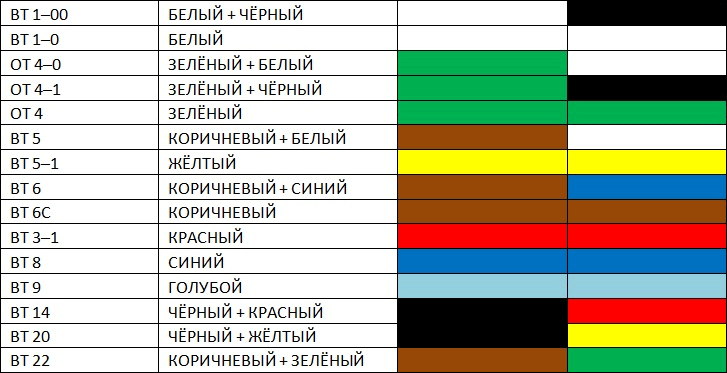
Important for sourcingPurity, form, quantity and timing help us assess your inquiry.
03 More materials
Also of interest.
MaterialTitanium wireView details  MaterialRolled titanium barsView details
 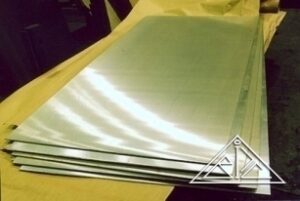 MaterialTitanium sheetsView details
 04 Inquiry
Your material.
Your specification.
Tell us the required purity, form and quantity so we can assess your request.