
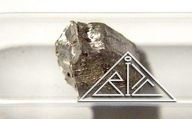
 MaterialCeriumView details
 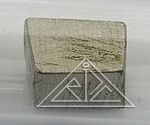 PRODUCT PHOTO / PROVISIONAL
01 Rare earth metals
Praseodymium.
Technical information on Praseodymium. Material data and supply forms on request.
Inquire about product02 Product information
Details on
Praseodymium.
| Product name: | Praseodymium metallic - 99.5% |
| Atomic mass: Density: Melting point: Manufacturer: Packaging |
140,90765 6.773 g/cm3 932 °C Russia, China, Japan In steel drums of 50 kg net weight each |
Chemical composition
| Total REM (TREM) | 98,37 % |
| Pr/TREM | min 98,29 % |
Praseodymium (Pr) A chemical element from the lanthanide group was discovered in 1885 by the Austrian chemist Karl Welsbach, who divided the rare earth metal, formerly known as didymium and considered one element, into two elements: praseodymium (Greek light green) and neodymium (new didymium).
Salts of praseodymium are mostly really light green, and the metal itself is externally indistinguishable from lanthanum and cerium is silvery-white, covered with an oxide film.
Praseodymium is part of such minerals as bastnezite, monacite, loparite, etc. It is mixed with other rare earth elements. Praseodymium is concentrated together with light lanthanides and separated with neodymium. Next, praseodymium is separated from neodymium and converted to pure metal metal metal thermally or electrolysis at 850°C.
In air, praseodymium slowly oxidizes, when heated, it ignites, forming praseodymium oxide Pr6O11. By calcining this oxide in the atmosphere H or CH4, Pr2O3 oxide is formed. If the oxidation of praseodymium is carried out in an atmosphere of O2 at a pressure of 10 MPa, praseodymium dioxide PrO2 is formed.
Praseodymium, like cerium, tends to exhibit a valence of 4+, in addition to the usual 3+ valence for all lanthanides. At the same time, praseodymium is very similar to another neighboring element - neodymium. The properties of most compounds of trivalent praseodymium and trivalent neodymium are extremely close.
Prices for praseodymium roughly correspond to prices for neodymium.
- Application of praseodymium:
- production of ceramics;
- brewing glass of pale green color (praseodymium oxide);
- laser radiation;
- medicine;
- superconducting materials;
- electrovacuum equipment;
- steel alloying.
Important for sourcingPurity, form, quantity and timing help us assess your inquiry.
03 More materials
Also of interest.
04 Inquiry
Your material.
Your specification.
Tell us the required purity, form and quantity so we can assess your request.